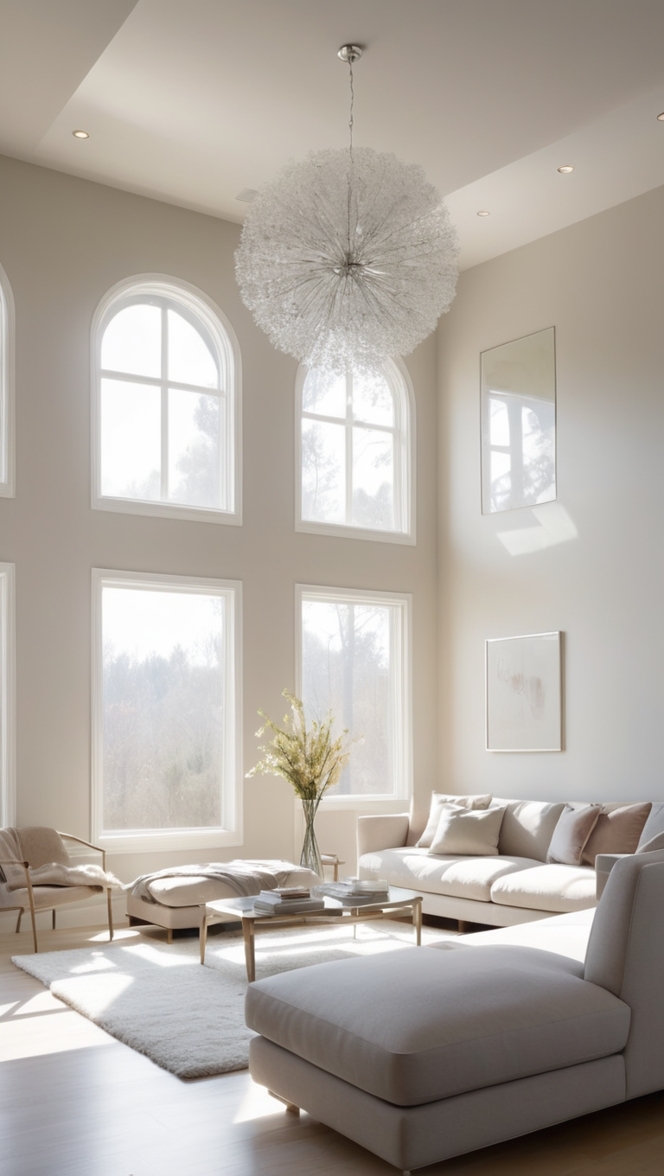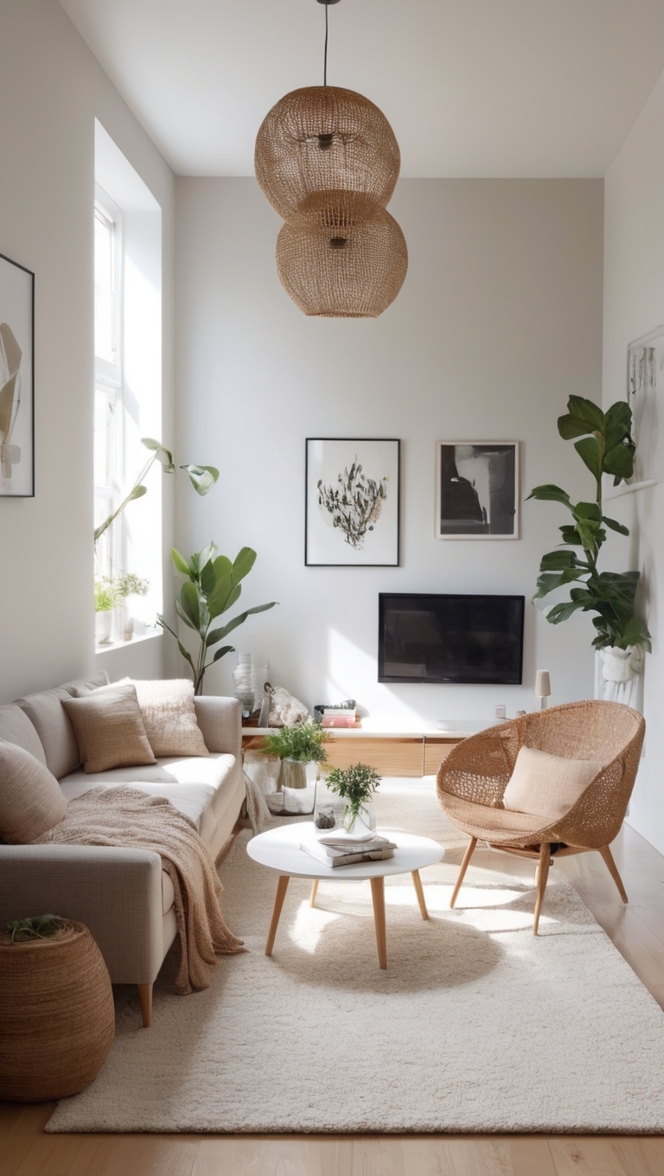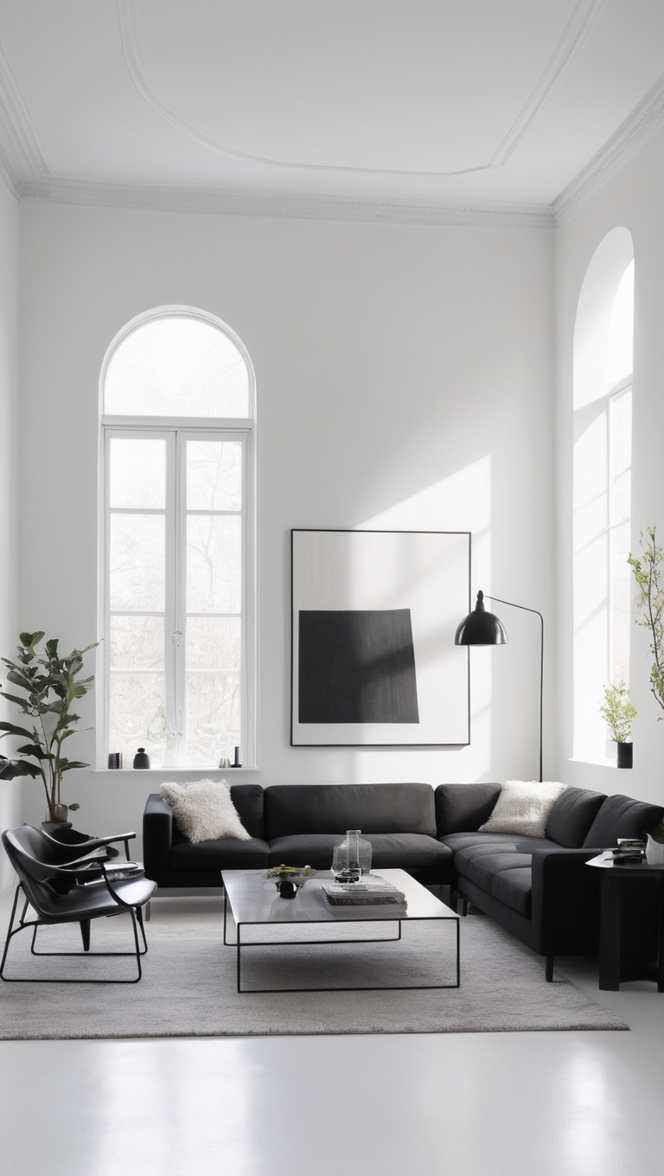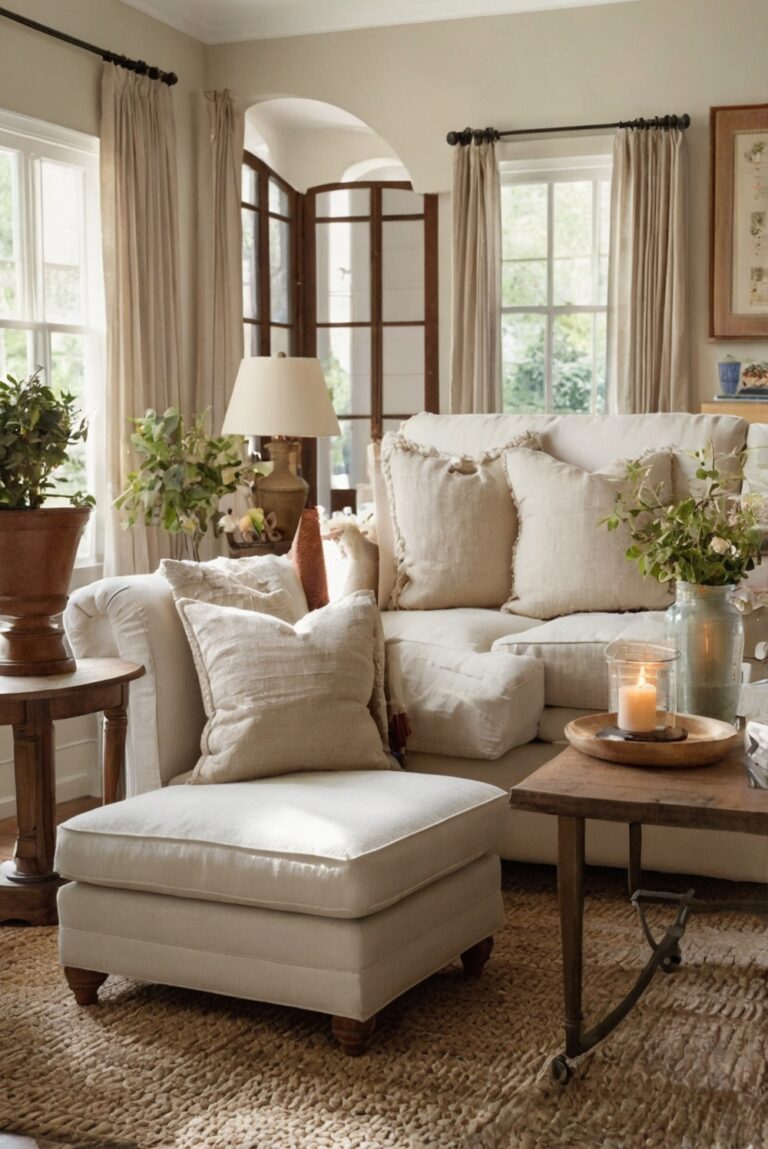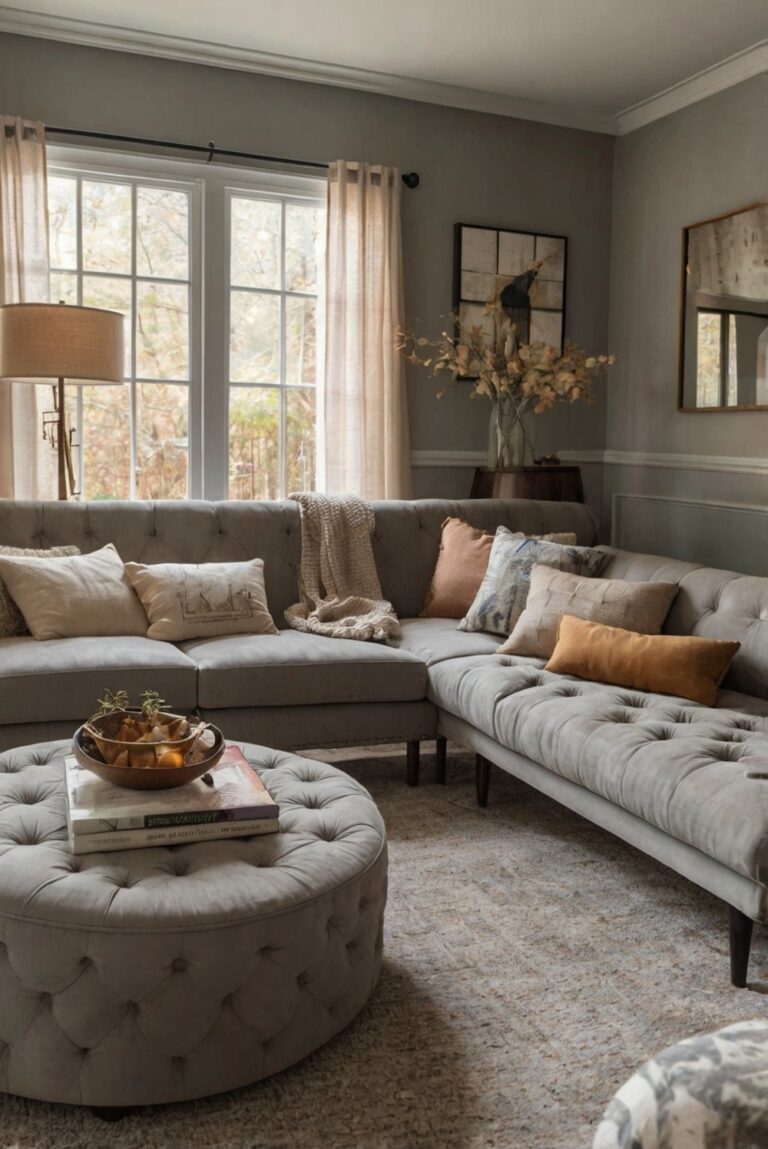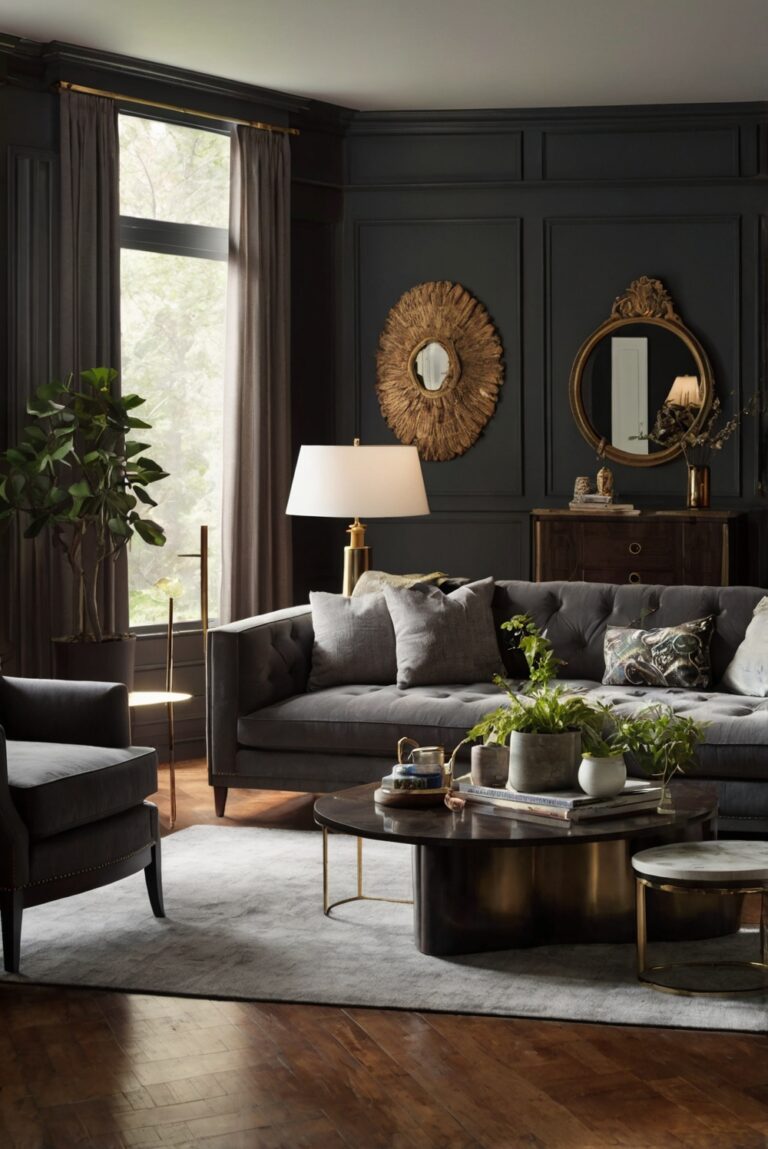
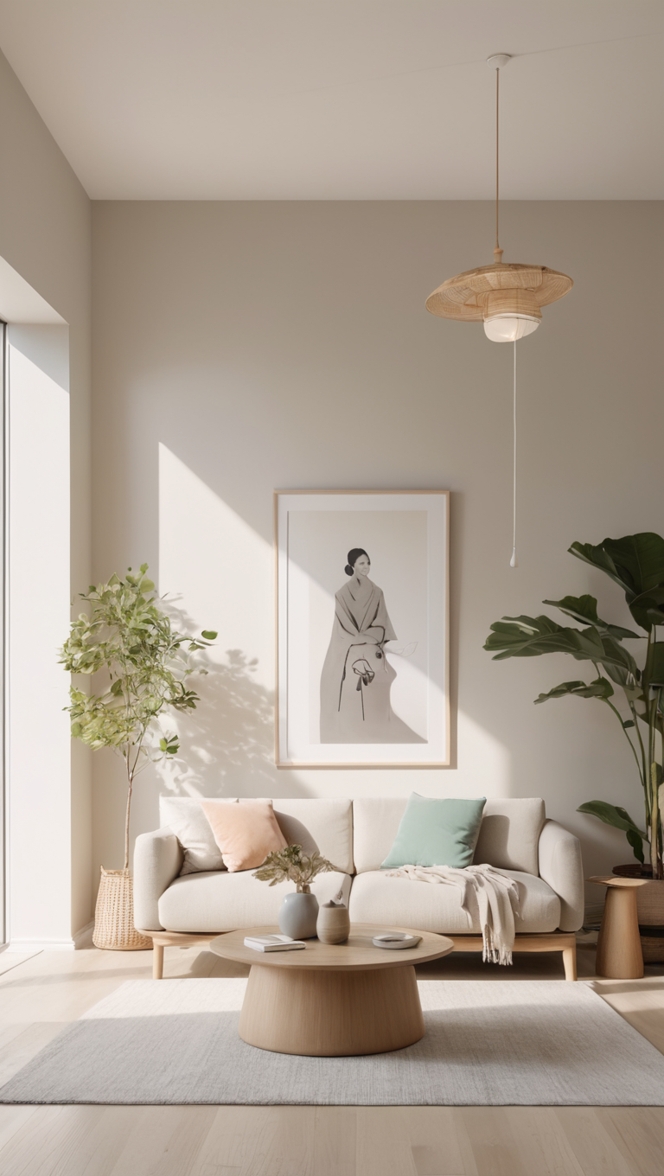
Curious about combining minimalist interior design and cozy decor in your living room? Discover the Japandi style with neutral colors and Scandinavian furniture.
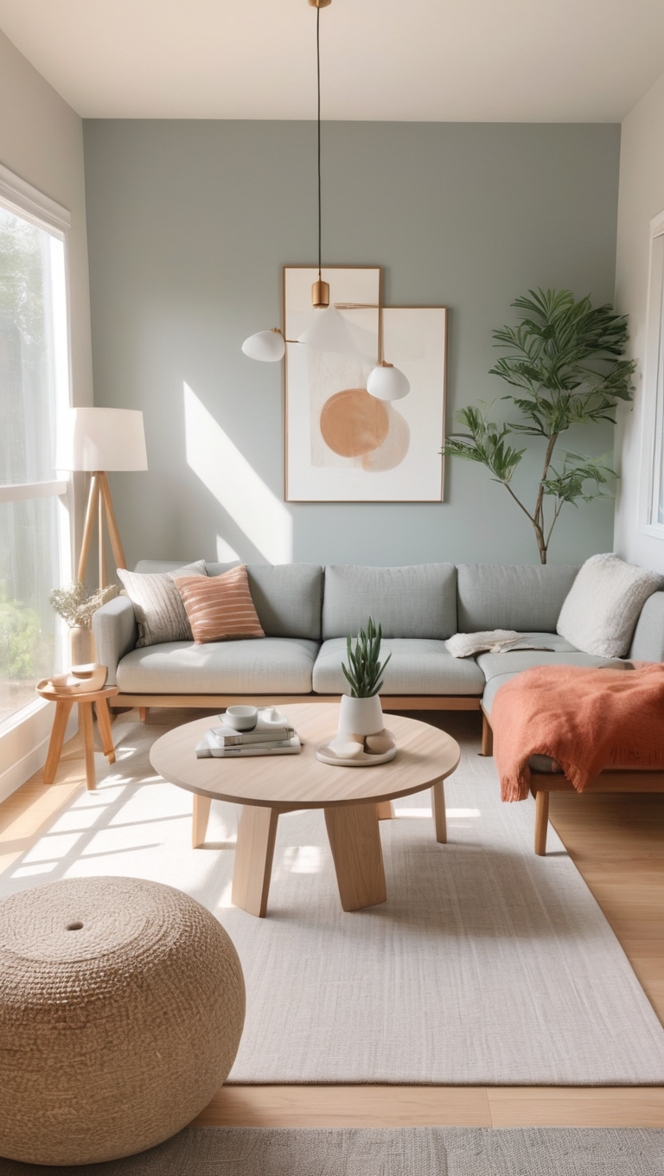
Disclosure: This post contains affiliate links. We may earn a commission at no extra cost to you.
In a minimalist Japandi living room, focus on clean lines, neutral colors, natural materials, and functional furniture. Choose simple yet elegant pieces that serve a purpose. Incorporate elements of Japanese and Scandinavian design such as wooden accents, cozy textiles, and plenty of greenery. Avoid clutter and opt for a clutter-free space. Balance is key – ensure that your room feels welcoming and serene. Stay organized to maintain the minimalist look.
To create a cozy minimalist Japandi living room, follow these steps:
1. Start by decluttering and only keeping items that serve a purpose.
2. Choose a neutral color palette with earthy tones and subtle pops of color.
3. Select furniture with clean lines and natural materials like wood and stone.
4. Incorporate cozy textiles such as wool rugs, linen curtains, and cushions for comfort.
5. Add greenery with plants or succulents to bring a sense of nature indoors.
6. Keep the space organized and ensure there is plenty of natural light flowing in.
7. Consider adding Japanese or Scandinavian-inspired decor elements like paper lanterns or minimalist artwork for a touch of cultural flair.
By following these steps and guidelines, you can create a cozy minimalist Japandi living room that is both stylish and functional.
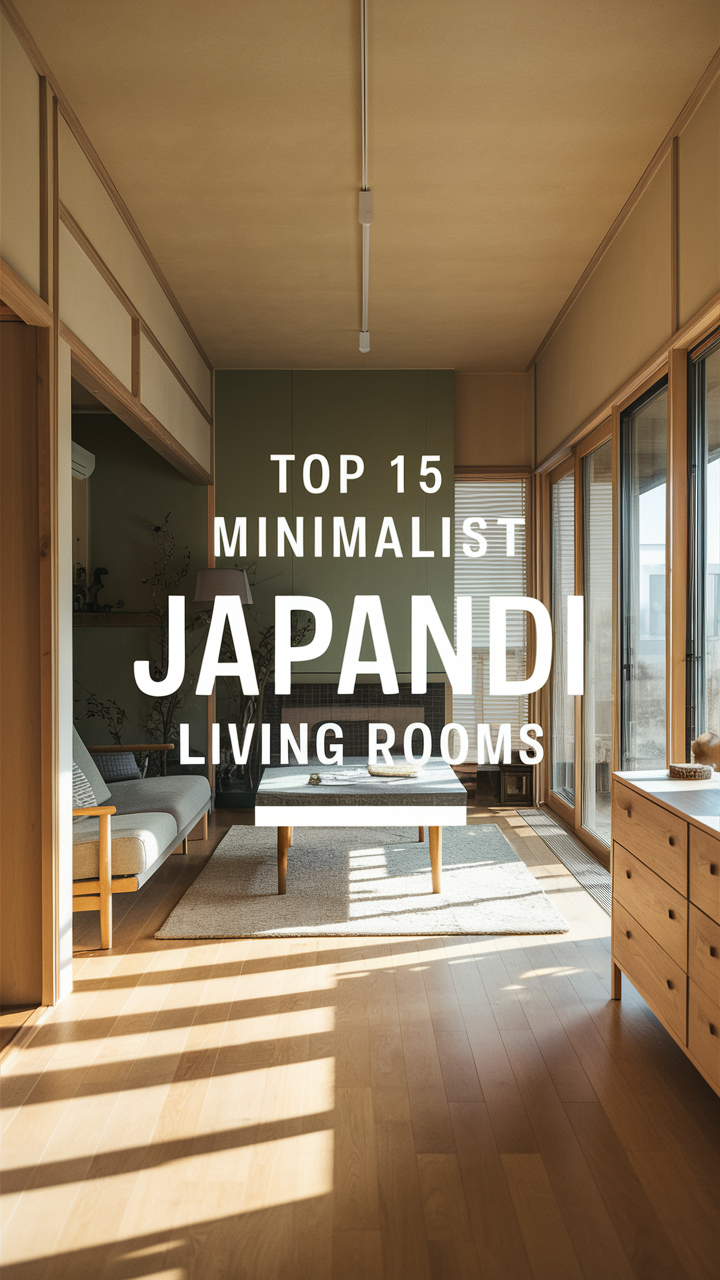
How can I create a cozy minimalist Japandi living room?
1. What is Japandi style and how does it differ from traditional minimalism?
As a homeowner who has always been drawn to the simplicity and elegance of minimalist design, I recently discovered the Japandi style, which combines elements of Japanese and Scandinavian aesthetics. Japandi takes the clean lines and functionality of Scandinavian design and infuses it with the warmth and tranquility of Japanese design. Unlike traditional minimalism, Japandi embraces a more organic and cozy feel, making it a perfect choice for creating a welcoming living space.
2. What are the key elements of a Japandi living room design?
In my quest to transform my living room into a cozy minimalist Japandi oasis, I focused on incorporating natural materials such as wood, bamboo, and rattan. These elements not only add warmth and texture to the space but also bring a sense of nature indoors. I also opted for simple and functional furniture pieces with clean lines and a neutral color palette to maintain the minimalist aesthetic of the Japandi style.
3. How can I incorporate natural materials and textures to achieve a cozy atmosphere in a Japandi living room?
To achieve a cozy atmosphere in my Japandi living room, I incorporated natural materials such as a wooden coffee table, rattan armchairs, and bamboo blinds. These elements not only add visual interest and texture to the space but also create a sense of warmth and coziness. Additionally, I layered soft textiles like wool rugs and linen curtains to enhance the tactile experience and make the room feel inviting.
4. What color palette should I use to create a minimalist Japandi living room?
For my minimalist Japandi living room, I opted for a neutral color palette consisting of soft earth tones, muted greens, and warm browns. These colors create a serene and harmonious atmosphere while allowing the natural materials and textures to take center stage. I also added subtle pops of black and charcoal to create contrast and depth in the space.
5. What furniture pieces are essential for a Japandi living room?
Essential furniture pieces for a Japandi living room include a low-profile sofa, a minimalistic coffee table, and a pair of sleek armchairs. These pieces should have clean lines, simple silhouettes, and a mix of wood and metal finishes to blend seamlessly with the Japandi aesthetic. I also incorporated multifunctional storage solutions to keep the space clutter-free and organized.
6. How can I add personal touches and warmth to a Japandi living room without cluttering the space?
To add personal touches and warmth to my Japandi living room, I curated a collection of handmade ceramics, woven textiles, and potted plants. These items not only reflect my personal style and interests but also infuse the space with character and charm. I strategically placed these decorative elements throughout the room to create visual interest without overwhelming the minimalist design.
7. What are some tips for maintaining the balance between minimalism and coziness in a Japandi living room?
One of the key tips for maintaining the balance between minimalism and coziness in a Japandi living room is to focus on quality over quantity. Invest in well-crafted furniture pieces, natural materials, and timeless accessories that will stand the test of time. Additionally, embrace negative space and declutter regularly to create a sense of openness and tranquility in the room. By striking the right balance between simplicity and warmth, you can create a truly inviting and harmonious Japandi living room.
Creating a cozy minimalist Japandi living room involves a careful balance of Japanese and Scandinavian design principles. Here are 12 unique ideas to help you achieve this aesthetic:
1. Serene White: Use a crisp white paint color like Sherwin Williams’ “Alabaster” to create a clean and calming backdrop for your Japandi living room.
2. Natural Wood Tones: Incorporate warm wood accents in furniture pieces like the coffee table or bookshelves to add a touch of nature to the space.
3. Soft Neutrals: Choose soft neutral colors like Benjamin Moore’s “Revere Pewter” for walls and upholstery to maintain a sense of harmony in the room.
4. Functional Furniture: Opt for multifunctional furniture pieces like a storage ottoman or a modular sofa to maximize space and utility.
5. Minimalist Lighting: Install sleek pendant lights or wall sconces with a minimalist design to enhance the overall aesthetic of the room.
6. Textural Contrast: Mix textures like a plush wool rug, a smooth leather armchair, and a nubby linen throw to create visual interest in the space.
7. Statement Plants: Incorporate statement plants like a fiddle leaf fig or a snake plant to bring a touch of greenery and life to the room.
8. Scandinavian Textiles: Add cozy Scandinavian textiles like a sheepskin rug or a chunky knit throw to create a warm and inviting atmosphere.
9. Japanese Zen: Create a Zen corner with a low meditation table, floor cushions, and a bamboo screen to infuse a sense of tranquility into the room.
10. Geometric Patterns: Introduce subtle geometric patterns in throw pillows or artwork to add a modern touch to the minimalist decor.
11. Nordic Minimalism: Embrace Nordic minimalism by showcasing simple, elegant decor pieces like a ceramic vase or a wooden sculpture.
12. Decluttered Space: Keep the room clutter-free by incorporating smart storage solutions like floating shelves or hidden cabinets to maintain the minimalist aesthetic.
By implementing these ideas and combining Japanese and Scandinavian design elements, you can create a cozy minimalist Japandi living room that is both stylish and functional.